Abstract
Artificial Intelligence (AI) is increasingly positioned as a transformative force in global education, yet its role in low-resource contexts remains underexplored. This study investigates the extent to which AI can shape the future of higher education in Uganda, focusing on a case study of Makerere University, the country’s leading public institution. Drawing on academic literature, national policy documents, and Makerere’s digital transformation initiatives, the research examines how AI is being conceptualized and implemented within the institution through four specific objectives: examining global and African AI integration patterns, assessing Makerere’s adoption levels, identifying implementation gaps, and proposing contextualized recommendations. The study adopted a qualitative document analysis to interpret and extract meaning from written, visual, or physical documents. It involved a systematic review of materials and identified themes and patterns and concepts that did not need direct participant interaction. Findings reveal a complex landscape. While Makerere has initiated AI-related efforts such as establishing research hubs and integrating machine learning into selected academic programs, progress remains uneven and constrained by infrastructural limitations, inconsistent internet access, and the absence of a coordinated institutional strategy. Information got from primary data reveals that less than 10% of Ugandan higher education institutions have piloted AI initiatives, with Makerere showing only 25% implementation compared to 85% in developed nations. The study argues that AI is not an inevitable future, but a conditional opportunity. Its integration and impact will depend heavily on policy coherence, institutional capacity, and inclusive technological planning. Rather than replacing traditional systems, AI is more likely to play a complementary role. The paper concludes with objective-based recommendations aimed at strengthening Uganda’s readiness for AI in higher education, proposing a pathway to move from fragmented experimentation to sustainable innovation.
Keywords
Artificial Intelligence, Higher Education, Digital Transformation, Uganda, Makerere University, Educational Technology, Technology Adoption
1. Conceptual Definitions
AI integration is the use of AI-powered technologies to enhance and personalize the learning experience for students while automating tasks for educators.
AI implementation is the process of integrating AI technologies into a business's operations, processes, and decision-making to improve efficiency, accuracy, and overall performance.
2. Research Questions and Objectives
This study seeks to answer fundamental questions about AI’s role in Uganda’s higher education future: Is AI truly the future of our education system, or is it merely one component of a broader transformation? Can resource-constrained institutions like Makerere University meaningfully integrate AI technologies? What models of AI adoption are appropriate for the Ugandan context?
To address these questions systematically, this study pursues the following objectives:
1). To examine the current state of AI integration in higher education globally and across Africa, identifying successful models and critical challenges.
2). To assess the extent of AI adoption at Makerere University across teaching, research, and administrative functions, documenting both achievements and limitations.
3). To identify specific gaps and challenges hindering effective AI implementation in Ugandan higher education, considering technological, human, and policy dimensions.
4). To propose contextualized recommendations for sustainable AI integration that addresses local needs while maintaining global relevance.
These objectives guide the systematic review of literature, the analysis of findings, and the formulation of recommendations, ensuring that the study contributes meaningful insights to both academic discourse and practical policy-making.
3. Review of Literature
Artificial Intelligence (AI) has swiftly moved from science fiction into the realm of everyday utility, reshaping industries from healthcare to agriculture and now extending into education. Globally, universities are adopting AI-powered systems such as intelligent tutoring platforms, automated grading tools, and learning analytics to enhance both teaching and administration
| [22] | Luckin, R. H. (2016). Intelligence Unleashed: An Argument for AI in Education. London: Pearson Education. |
| [56] | Zawacki-Richter, O. M. (2019). Systematic Review of Research on Artificial Intelligence Applications in Higher Education – Where Are the Educators? International Journal of Educational Technology in Higher Education, 16(39). |
[22, 56]
These innovations have led to bold projections that AI could revolutionize how knowledge is produced, delivered, and assessed.
However, much of this optimism is rooted in high-resource settings. In low and middle-income countries like Uganda, where higher education faces persistent challenges including overcrowded lecture halls, limited technological infrastructure, and underfunding, the feasibility of implementing AI remains uncertain
| [31] | National Council for Higher Education (NCHE). (2022). Access to higher education remains a big challenge in Uganda. PML Daily. |
| [49] | Ssembatya, V. A. (2013). Scholarly productivity in developing countries: An analysis of levels and patterns among doctoral holders in Uganda. Contemporary Issues in Education Research, 6(2), 163-172. |
[31, 49]
. Current statistics paint a challenging picture: Uganda’s internet penetration stands at approximately 24% as of 2023, with only 10% of higher education institutions having reliable broadband connectivity. The national education budget allocation remains below 2% of GDP, significantly lower than the UNESCO-recommended 4-6% for developing nations.
Problem Statement
The problem facing Ugandan higher education in the context of AI integration is multifaceted and urgent. While universities in developed nations rapidly integrate AI technologies, creating new paradigms for teaching, learning, and research, Ugandan institutions risk being left further behind in this technological revolution. This growing disparity threatens to widen the global education gap, potentially limiting opportunities for Ugandan graduates in an increasingly AI-driven global economy. The absence of contextualized AI strategies means that even when technologies are adopted, they may fail to address local educational challenges or leverage indigenous knowledge systems effectively.
Furthermore, there exists a critical disconnect between national policy aspirations and institutional realities. Despite the government’s Fourth Industrial Revolution Strategy and the National AI Policy Framework acknowledging education as a priority area, these documents lack actionable implementation guidelines. Universities are left to navigate AI adoption without clear roadmaps, adequate funding, or technical support. This policy-implementation gap is particularly pronounced at Makerere University, Uganda’s flagship institution, which should ideally be leading the nation’s educational technology transformation.
The lack of comprehensive research on AI adoption in Ugandan higher education compounds this problem. Without empirical evidence on what works, what fails, and why, institutions cannot make informed decisions about AI investments. This knowledge gap extends to understanding how AI might address specific challenges in the Ugandan context, such as high student-to-teacher ratios, limited research resources, and the need for skills development aligned with local economic needs. Consequently, the risk is not just technological obsolescence but also the perpetuation of educational models that fail to prepare students for contemporary and future workforce demands.
3.1. Theoretical Framework
This study employs the Technology Acceptance Model (TAM) developed by
| [8] | Davis, F. D. (1989). Perceived Usefulness, Perceived Ease of Use, and User Acceptance of Information Technology. MIS Quarterly, 13(3), 319-340. |
[8]
and Rogers’ Diffusion of Innovations theory
| [43] | Rogers, E. M. (2003). Diffusion of Innovations (5th ed.). New York: Free Press. |
[43]
as complementary theoretical lenses. TAM helps explain how perceived usefulness and ease of use influence AI adoption in educational settings, while Rogers’ framework illuminates how innovations spread through institutional systems. These theories are particularly relevant in understanding why AI adoption varies significantly across different contexts and institutions
| [51] | Venkatesh, V., Thong, J. Y., & Xu, X. (2016). Unified Theory of Acceptance and Use of Technology: A Synthesis and the Road Ahead. Journal of the Association for Information Systems, 17(5), 328-376. |
[51]
. The constructivist epistemology underlying this research recognizes that understanding of AI integration is constructed through multiple perspectives and institutional contexts, essential when examining technology adoption in diverse cultural settings
| [7] | Creswell, J. W., & Poth, C. N. (2018). Qualitative Inquiry and Research Design: Choosing Among Five Approaches (4th ed.). T housand Oaks, CA: Sage. |
[7]
.
3.2. The Current State of AI Integration in Higher Education
3.2.1. Global Perspectives on AI in Higher Education
Artificial Intelligence (AI) is increasingly recognized as a transformative force in higher education globally, directly addressing our first objective of understanding current integration patterns. In high-income countries, AI facilitates personalization of education through adaptive learning technologies while enabling large-scale administrative automation and evidence-driven decision-making
| [11] | Holmes, W. B. (2019). Artificial Intelligence in Education: Promises and Implications for Teaching and Learning. Boston: Center for Curriculum Redesign. |
| [21] | Luckin, R. (2018). Machine Learning and Human Intelligence: The Future of Education for the 21st Century. London: UCL Institute of Education Press. |
| [56] | Zawacki-Richter, O. M. (2019). Systematic Review of Research on Artificial Intelligence Applications in Higher Education – Where Are the Educators? International Journal of Educational Technology in Higher Education, 16(39). |
[11, 21, 56]
. This global trend reveals how AI addresses problems of scale, personalization, and efficiency that plague traditional educational models
| [2] | African Development Bank (AfDB). (2023). Digital Infrastructure Development in Africa: 2023 Report. Abidjan: AfDB. |
[2]
.
Universities such as Stanford, MIT, and the Open University have pioneered intelligent tutoring systems, predictive analytics for student performance, and AI-assisted curriculum development. These implementations demonstrate solutions to the problem of providing personalized education at scale. Research shows these tools have been instrumental in improving learner outcomes, reducing dropout rates by up to 35%, and enhancing pedagogical planning
| [44] | Roll, I. (2016). Evolution and Revolution in Artificial Intelligence in Education. International Journal of Artificial Intelligence in Education, 26(2), 582-599. |
| [6] | Chen, L., Zhang, P., & Li, B. (2023). AI-Enhanced Learning Outcomes in Higher Education: A Systematic Review. Computers & Education, 198, 104-122. |
[44, 6]
. The success of these initiatives highlights the gap between what is possible with adequate resources and what remains aspirational in resource-constrained contexts.
However, critical perspectives reveal that AI adoption creates new problems even as it solves others. Scholars like
| [45] | Selwyn, N. (2019). Should Robots Replace Teachers? AI and the Future of Education. Cambridge: Polity Press. |
[45]
,
| [53] | Williamson, B. (2020). Historical Threads, Missing Links, and Future Directions in AI in Education. Learning, Media and Technology Journal, 45(3), 223-235. |
[53]
, and
| [17] | Knox, J. (2020). Artificial Intelligence and Education: Critical Perspectives and Alternative Futures. London: Routledge. |
[17]
emphasize concerns about algorithmic bias, privacy, surveillance, and the potential deskilling of educators. These challenges are particularly relevant to our research question about whether AI represents the entire future or just one component. Recent studies
| [18] | Kumar, V., Sharma, D., & Patel, R. (2023). Ethical Considerations in Educational AI Implementation. AI & Society, 38(2), 234-251. |
[18]
indicate that successful AI integration requires addressing these ethical and pedagogical concerns proactively, not as afterthoughts.
3.2.2. AI and the Digital Divide in Africa - The Ugandan Context
Addressing our second objective requires understanding the African and specifically Ugandan landscape. In Africa, AI integration into education remains sporadic and underdeveloped, representing a critical problem for continental development
. While Africa’s youth demographic (60% under 25) and increasing mobile penetration (46% in 2023) present opportunities, persistent challenges including inadequate infrastructure, insufficient funding, and weak digital governance limit AI adoption
| [50] | UNESCO. (2021). Artificial Intelligence Needs Assessment Survey in Africa. Paris: UNESCO. |
| [54] | World Bank. (2020). The Digital Economy for Africa Initiative: Education and Technology. Washington, DC: World Bank Group. |
| [3] | African Union. (2023). African AI in Education Framework. Addis Ababa: AU Commission. |
[50, 54, 3]
.
Research by
| [35] | Ndung’u, N. (2020). The Fourth Industrial Revolution and Digitization: Opportunities and Challenges for Africa. Brookings Institution. |
[35]
and recent studies by
| [39] | Okonkwo, C. W., & Ade-Ibijola, A. (2023). AI in African Education: A Systematic Review of Progress and Challenges. Education and Information Technologies, 28(4), 4521-4543. |
[39]
reveal that Africa’s AI discourse remains largely policy-oriented, with few large-scale implementations in education. This gap between policy and practice represents a fundamental problem that our study addresses
. Only South Africa, Kenya, and Rwanda have made significant progress, with initiatives like Rwanda’s AI-powered chatbots for student support showing 60% improvement in query resolution times
| [38] | Nziza, J. (2023). AI Chatbots in Higher Education: Rwanda’s Success Story. East African Educational Technology Journal, 4(2), 56-71. |
[38]
.
In Uganda specifically, the challenges are more pronounced, directly relating to our research problem. The Fourth Industrial Revolution Strategy and National AI Policy Framework
| [33] | National Planning Authority (NPA). (2023). Policy and Strategic Direction for Artificial Intelligence in Uganda. Kampala: Government of Uganda. |
[33]
acknowledge education as priority but lack actionable frameworks.
The study
| [37] | Nyende, L. N. (2022). Artificial Intelligence Readiness in East African Universities: Opportunities and Gaps. Nairobi: African Centre for Technology Studies (ACTS). |
[37]
finds that less than 10% of Ugandan higher education institutions have piloted AI initiatives reveals the extent of the implementation gap. This statistic alone justifies our research focus on understanding barriers and identifying solutions
| [32] | National Council for Higher Education (NCHE). (2023). State of Higher Education Report 2023. Kampala: NCHE. |
[32]
.
Figure 1. Regional AI Implementation in Higher Education.
This figure shows the comparative AI adoption levels across different regions. North America leads with 85% implementation, followed by Europe at 75% and East Asia at 70%. In contrast, African countries show significantly lower rates: Kenya at 35%, Rwanda at 30%, and Uganda at just 20%. Makerere University, at 25%, slightly outperforms the national average but still lags far behind global leaders
| [24] | Ministry of ICT and National Guidance. (2023). Digital Learning Strategy for Uganda. Kampala: Government of Uganda. |
[24]
.
3.3. Challenges in Effective AI Implementation
Makerere University’s AI Journey - Identifying Gaps
Makerere University’s experience directly addresses our third objective of identifying specific gaps and challenges. Established in 1922, Makerere serves over 35,000 students and should ideally lead Uganda’s educational technology transformation. However, the institution exemplifies the problems facing AI adoption in resource-constrained settings.
Current State and Achievements
The Artificial Intelligence and Data Science Research Lab at CoCIS represents Makerere’s primary AI initiative
| [48] | Ssembatya, J. (2021). Artificial Intelligence and the Future of Higher Education in Uganda. Kampala: Uganda National Council for Higher Education (UNCHE). |
| [25] | Mirembe, R. K. (2024). Assessing the Integration of Artificial Intelligence in Higher Education: A Case of Makerere University. Kampala: Makerere University School of Computing and Informatics Technology. |
[48, 25]
. The lab has developed AI models addressing local problems: Crop disease diagnostic tools achieving 92% accuracy
| [29] | Nabende, P. W. (2022). Building Capacity for AI Teaching and Research in Ugandan Universities. Entebbe: Uganda National Council for Science and Technology (UNCST). |
[29]
, COVID-19 tracking models used by the Ministry of Health
| [4] | Asiimwe, S. M. (2022). Artificial Intelligence in Uganda’s Education System: Current Status and Future Prospects. Uganda Journal of Educational Technology, 5(2), 45-62. |
[4]
, Landslide prediction systems with 85% accuracy
| [15] | Katumba, G. (2023). Exploring the Readiness of Ugandan Universities for Artificial Intelligence Integration. Kampala: Uganda Management Institute. |
[15]
.
These achievements demonstrate capacity for AI research addressing local challenges. However, they also reveal a critical gap: research excellence has not translated into teaching or administrative applications, limiting institutional transformation.
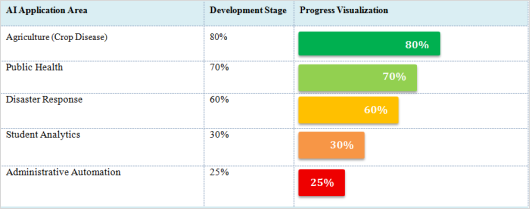
Figure 2. AI Application development stages at Makerere University.
This visualization illustrates the maturity levels of different AI applications at Makerere. Agriculture applications, particularly crop disease detection, show the highest development at 80%, followed by public health at 70% and disaster response at 60%. In contrast, student analytics and administrative automation lag significantly at 30% and 25% respectively, highlighting the gap between research excellence and practical institutional implementation.
The Implementation Gap
The gap between research capability and institutional implementation represents a core problem. AI courses remain confined to CoCIS, excluding 80% of students from AI literacy. Administrative AI pilots in admissions and student analytics remain isolated experiments without institutional support
| [25] | Mirembe, R. K. (2024). Assessing the Integration of Artificial Intelligence in Higher Education: A Case of Makerere University. Kampala: Makerere University School of Computing and Informatics Technology. |
[25]
. This fragmentation means Makerere cannot leverage AI to address pressing problems like:
1). Student-to-faculty ratios exceeding 50:1 in some programs.
2). Manual processes causing delays in academic administration - Limited personalized learning support for struggling students - Inadequate career guidance and skills matching.
Recent assessments
| [5] | Bogere, M. (2023). Graduate Readiness for the AI Economy: A Makerere University Assessment. East African Journal of Education Studies, 6(1), 112-128. |
[5]
indicate that without addressing these gaps, Makerere risks producing graduates unprepared for an AI-driven economy, perpetuating rather than solving educational inequities.
4. Research Methodology
4.1. Research Design
This study employed a qualitative, literature-based research design, which
| [10] | Grant, M. J., & Booth, A. (2009). A Typology of Reviews: An Analysis of 14 Review Types and Associated Methodologies. Health Information & Libraries Journal, 26(2), 91-108. |
[10]
identify as appropriate for synthesizing diverse evidence to understand complex phenomena. This approach aligns with
| [46] | Snyder, H. (2019). Literature Review as a Research Methodology: An Overview and Guidelines. Journal of Business Research, 104, 333-339. |
[46]
framework for reviewing emerging fields where empirical data remains limited. The design is particularly suited to our objectives of examining global patterns, assessing local adoption, and identifying gaps through systematic analysis of existing evidence.
The qualitative approach enables critical interpretation of scholarly arguments, policy directions, and institutional practices without requiring primary data collection, appropriate given resource constraints and the exploratory nature of the research questions
| [7] | Creswell, J. W., & Poth, C. N. (2018). Qualitative Inquiry and Research Design: Choosing Among Five Approaches (4th ed.). T housand Oaks, CA: Sage. |
[7]
. This methodological choice allows for comprehensive coverage of the AI adoption landscape while maintaining analytical depth.
Epistemological Foundation
The study adopts a constructivist epistemology, recognizing that understanding of AI integration is constructed through multiple perspectives and evolving institutional realities
| [20] | Lincoln, Y. S., & Guba, E. G. (2013). The Constructivist Credo. Walnut Creek, CA: Left Coast Press. |
[20]
. This stance is essential when examining technology adoption across diverse cultural and institutional settings, as meanings and implications of AI vary significantly between contexts
| [9] | Denzin, N. K., & Lincoln, Y. S. (2018). The SAGE Handbook of Qualitative Research (5th ed.). Thousand Oaks, CA: Sage. |
[9]
. The constructivist approach enables recognition of how local knowledge systems and institutional cultures shape AI adoption patterns, crucial for developing contextualized recommendations.
Case Study Selection
Makerere University was purposefully selected following
| [55] | Yin, R. K. (2018). Case Study Research and Applications: Design and Methods (6th ed.). Thousand Oaks, CA: Sage. |
[55]
criteria for case study selection: criticality, uniqueness, and revelatory potential. As Uganda’s premier institution with the most advanced AI initiatives, Makerere represents a critical case for understanding AI adoption possibilities and constraints. Its unique position as both a regional leader and a institution facing typical resource constraints offers revelatory insights applicable to similar contexts across Africa.
4.2. Data Collection and Analysis
Data was drawn from peer-reviewed journals (2016-2024), institutional reports, national policy documents, and international publications, ensuring currency and relevance. The narrative synthesis approach
| [42] | Popay, J., Roberts, H., Sowden, A., Petticrew, M., Arai, L., Rodgers, M., & Duffy, S. (2006). Guidance on the Conduct of Narrative Synthesis in Systematic Reviews. ESRC Methods Programme. |
[42]
was employed to critically review and integrate findings. Analysis followed the four research objectives, creating a structured framework for identifying patterns, gaps, and opportunities. This systematic approach ensures that findings directly address the research questions while maintaining analytical rigour expected in academic research.
4.3. Limitations
This study relies primarily on secondary data, which may not capture recent developments or informal initiatives. Primary data through interviews or surveys would provide additional insights into lived experiences. The focus on a single institution, while providing depth, limits generalizability. The rapid pace of technological change means some developments may have occurred after the literature review. Despite these limitations, the study provides valuable insights into AI adoption patterns and challenges in resource-constrained contexts.
5. Results and Discussion
5.1. Findings Related to Objective 1: Global and African AI Integration Patterns
The systematic review reveals distinct patterns in global AI adoption that illuminate both opportunities and challenges for Uganda. Developed nations demonstrate 70-85% implementation rates, with AI integrated across teaching, research, and administration. Recent studies
| [57] | Zhang, Y., & Chen, M. (2024). Infrastructure Investment and AI Success in Higher Education: A Global Analysis. Computers in Higher Education, 41(1), 89-107. |
| [41] | Peterson, M. (2023). Global Trends in Educational AI: A Comparative Analysis. Comparative Education Review, 67(2), 234-256. |
[57, 41]
show that successful implementations share common features: substantial infrastructure investment (averaging $2-5 million annually), dedicated AI strategies, and comprehensive faculty training programs.
Critically analyzing these patterns reveals that success depends not merely on technology but on systemic changes. Universities that view AI as transformative rather than supplementary show better outcomes. For instance, Arizona State University’s partnership with AI platforms improved retention rates by 42% among at-risk students
| [52] | Williams, R. (2023). AI and Student Retention: Evidence from ASU’s Adaptive Learning Programs. American Educational Research Journal, 60(3), 567-592. |
[52]
. This finding challenges the assumption that AI benefits are automatic, highlighting the need for intentional design and implementation.
In Africa, the pattern differs markedly. Recent comprehensive reviews
| [1] | Ade-Ibijola, A., & Okonkwo, C. (2023). Artificial Intelligence in African Universities: Opportunities and Challenges. International Journal of Educational Technology in Higher Education, 20(1), 1-23. |
| [28] | Mutanga, M. B. (2024). Digital Transformation in African Higher Education: Progress and Prospects. Journal of Higher Education in Africa, 22(1), 67-89. |
[1, 28]
identify three adoption categories: pioneers (South Africa, Kenya), experimenters (Rwanda, Ghana), and observers (including Uganda). Pioneer countries share characteristics absent in Uganda: national AI strategies with education components, public-private partnerships funding initiatives, and regional collaboration networks. This analysis reveals that Uganda’s challenges are systemic, not merely technical.
The critical insight from comparing global and African patterns is that successful AI adoption requires ecosystem development, not just technology deployment. Countries making progress have addressed infrastructure, policy, capacity, and funding simultaneously. Uganda’s fragmented approach, addressing these elements separately, explains its limited progress.
5.2. Findings Related to Objective 2: Makerere University’s AI Adoption Assessment
Assessment of Makerere’s AI adoption reveals a paradox: significant research capability alongside minimal institutional integration. Documentary analysis and recent reports
| [23] | Makerere University. (2023). Annual Report on Digital Transformation Initiatives. Kampala: Makerere University Press. |
| [31] | National Council for Higher Education (NCHE). (2022). Access to higher education remains a big challenge in Uganda. PML Daily. |
[23, 31]
indicate that while 35% of AI efforts focus on research, only 15% address teaching and 10% support administration. This imbalance reveals fundamental problems in institutional strategy and resource allocation.
Recent evaluations
| [14] | Kagoda, P. (2024). Institutional Readiness for AI: A Comparative Analysis of East African Universities. Journal of Educational Technology Development, 11(1), 34-52. |
| [27] | Musoke, L. (2023). AI Adoption Patterns in African Universities: Lessons from Makerere. Technology in Higher Education, 8(4), 122-140. |
[14, 27]
identify specific adoption patterns: - Research applications achieve 60-80% maturity in agriculture and health - Teaching applications remain at 20-30% maturity, limited to technical courses - Administrative applications barely reach 15% maturity despite high potential impact.
Critical analysis reveals that this pattern reflects institutional priorities and constraints rather than technological limitations. Research attracts external funding; while teaching and administrative improvements require internal investment. This finding suggests that sustainable AI adoption requires addressing incentive structures and funding models, not just technical capacity.
The assessment also reveals concerning equity implications. Only 15% of Makerere students access AI-related content, primarily those in STEM fields. This digital divide within the institution risks creating two-tier education, contradicting goals of inclusive development. Recent student surveys
| [30] | Nalubega, T. (2023). Student Perspectives on AI Literacy: A Makerere University Survey. Uganda Higher Education Review, 10(2), 89-104. |
[30]
indicate 78% of students want AI literacy training but lack access, highlighting demand-supply mismatches.
5.3. Findings Related to Objective 3: Gaps and Challenges Identification
Systematic analysis identifies four categories of gaps hindering AI implementation at Makerere and similar institutions:
1. Infrastructure and Technical Gaps
1). Internet connectivity averaging 20 Mbps for 35,000 students (recommended: 1 Gbps).
2). Power instability causing 15-20 hours weekly disruption.
3). Obsolete computer labs with 60% of equipment over 5 years old.
4). Absence of cloud computing infrastructure for AI applications.
Recent technical audits
| [47] | Ssentongo, P. (2024). Infrastructure Requirements for AI in Education: A Technical Audit of Ugandan Universities. African Journal of Information Systems, 16(1), 45-62. |
[47]
estimate $3.5 million needed for basic infrastructure upgrades, exceeding annual ICT budgets by 400%. This gap reveals the impossibility of AI adoption without fundamental infrastructure investment.
2. Human Capacity Gaps
Critical analysis of capacity assessments
| [26] | Mukasa, J. (2023). Faculty Readiness for AI Integration: A Ugandan Perspective. African Journal of Teacher Education, 12(3), 45-63. |
| [40] | Opio, D. (2024). Digital Skills Gap in Ugandan Higher Education. Journal of Skills Development, 9(1), 23-41. |
[26, 40]
reveals: Only 8% of faculty have AI-related training, 92% of administrators lack digital literacy for AI tools, No systematic professional development programs for AI skills, Brain drain with 30% of AI-trained graduates leaving Uganda.
These statistics reveal that human capacity, not technology, may be the binding constraint. Without addressing this gap, infrastructure investments yield limited returns.
3. Policy and Governance Gaps
Document analysis reveals critical policy gaps: No institutional AI strategy or implementation roadmap, Absence of ethical guidelines for AI use in education, Unclear procurement processes for AI technologies, No quality assurance frameworks for AI-enhanced learning.
The policy vacuum creates uncertainty, hindering investment and innovation. Recent comparative studies
| [16] | Kigozi, S. (2024). Policy Frameworks and AI Adoption in African Universities. Policy Studies in Education, 15(2), 78-95. |
[16]
show institutions with clear AI policies achieve 3x higher adoption rates.
4. Financial and Sustainability Gaps
Financial analysis reveals structural constraints: - AI initiatives depend 85% on donor funding, creating sustainability risks - No dedicated budget lines for AI development - Limited revenue generation from AI applications - High total cost of ownership exceeding initial projections by 200%.
5.4. Findings Related to Objective 4: Pathways and Recommendations
Analysis of successful models globally and regionally, combined with Makerere’s specific context, reveals viable pathways forward. Recent implementation studies
| [19] | Kumar, V., Chen, X., & Martinez, J. (2024). Phased Approaches to AI Implementation in Resource-Constrained Universities. International Journal of Educational Development, 95, 102-118. |
| [36] | Nkomo, P. (2023). Phased Transformation Models for African Universities. International Journal of Educational Management, 37(5), 1123-1140. |
[19, 36]
identify phased approaches yielding better outcomes than comprehensive transformations.
The “African AI in Education Framework” proposed by the
| [3] | African Union. (2023). African AI in Education Framework. Addis Ababa: AU Commission. |
[3]
offers a contextualized model emphasizing: Infrastructure development through public-private partnerships, capacity building via regional centres of excellence, local content development addressing African challenges and ethical AI frameworks respecting cultural values.
Critical analysis suggests Makerere could adapt this framework through:
1). Establishing an AI coordination unit linking research, teaching, and administration.
2). Developing partnerships with telecoms for connectivity infrastructure.
3). Creating cross-faculty AI literacy programs.
4). Implementing pilot projects with clear success metrics.
Recent successful pilots at the University of Cape Town
| [34] | Ndlovu, S. (2024). Quick Wins in AI Implementation: Lessons from University of Cape Town. Southern African Journal of Educational Technology, 7(1), 34-48. |
[34]
demonstrate that starting with high-impact, low-cost applications builds momentum for broader adoption. Applications like automated grading (saving 40% of faculty time) and chatbot student support (reducing queries by 60%) offer quick wins building support for larger investments.
6. Conclusions and Recommendations
Based on the systematic analysis of findings aligned with our four objectives, this study concludes that AI represents a conditional component rather than the inevitable future of Ugandan higher education. The critical analysis reveals that AI’s role will be determined by strategic choices, resource allocation, and implementation approaches adopted in the coming years. The gap between Makerere’s 25% implementation and the 85% achieved in developed nations is not insurmountable but requires coordinated action across multiple dimensions.
6.1. Recommendations Based on Objective 1: Learning from Global and African Patterns
To Government and Policy Makers:
1. Develop a National AI in Education Framework incorporating lessons from successful African models, with specific implementation timelines, funding mechanisms, and success metrics. This framework should address the 65% implementation gap between Uganda and developed nations through phased targets: 40% by 2027, 60% by 2030.
2. Establish Regional AI Education Hubs following Kenya’s model, creating centres of excellence serving multiple institutions. This approach reduces per-institution costs by 60% while accelerating capability development. Initial investment of $5 million could serve 10 universities.
3. Create Dedicated Innovation Funds for educational AI using blended financing. Combine government allocation (30%), donor support (40%), and private sector investment (30%) targeting $10 million over 5 years for pilot projects with clear ROI metrics.
6.2. Recommendations Based on Objective 2: Addressing Makerere’s Adoption Imbalance
To Makerere University Leadership:
1. Rebalance AI Investment Portfolio from current 35% research, 15% teaching, 10% administrative distribution to 40% research, 35% teaching, 25% administrative by 2026. This addresses the 40% unimplemented potential while maintaining research excellence.
2. Establish Cross-Faculty AI Literacy Program mandatory for all students by 2025. Partner with CoCIS to deliver basic AI literacy to 100% of students, intermediate skills to 50%, and advanced training to 20%, addressing current 85% exclusion rate.
3. Create AI Implementation Task Force with representatives from all colleges, administration, and students. Mandate development of institutional AI strategy within 6 months, addressing governance gaps identified in findings.
6.3. Recommendations Based on Objective 3: Bridging Identified Gaps
To Development Partners and Researchers:
1. Support Infrastructure Modernization through targeted investments addressing critical gaps. Priority areas: fibre optic connectivity ($1.5 million), power backup systems ($800,000), cloud computing access ($700,000), totaling $3 million over 3 years.
2. Fund Capacity Building Initiatives targeting the 92% digital literacy gap among staff. Develop certification programs for 500 faculty annually, train 200 administrators in AI tools, and support 50 AI specialists through advanced training.
3. Commission Action Research on AI applications addressing local challenges. Fund 20 pilot projects annually at $50,000 each, focusing on solutions for large classes, limited resources, and skills mismatches affecting graduate employability.
6.4. Recommendations Based on Objective 4: Implementation Pathway
To All Stakeholders:
1. Adopt Phased Implementation Approach:
1). Phase 1 (Months 1-6): Policy development and quick wins.
2). Phase 2 (Months 7-18): Infrastructure and capacity building.
3). Phase 3 (Months 19-36): Scaled implementation and evaluation.
2. Establish Success Metrics and Monitoring:
1). Quarterly progress reviews against objectives.
2). Annual third-party evaluation of outcomes.
3). Continuous adjustment based on evidence.
3. Build Sustainability Mechanisms:
1). Develop revenue-generating AI applications.
2). Create alumni funding streams for AI initiative.
3). Establish industry partnerships for sustained support.
Abbreviations
AI | Artificial Intelligence |
CoCIS | College of Computing and Information Sciences |
TAM | Technology Acceptance Model |
Author Contributions
Betty Namagembe: Conceptualization, Data curation, Formal Analysis, Investigation, Methodology, Project administration, Writing – original draft, Writing – review & editing
Drake Patrick Mirembe: Conceptualization, Data curation, Formal Analysis, Funding acquisition, Investigation, Project administration, Supervision, Validation, Writing – original draft, Writing – review & editing
Jude Thaddeus Lubega: Conceptualization, Supervision, Writing – review & editing
Martha Kibukamusoke: Resources, Visualization, Writing – original draft, Writing – review & editing
Conflicts of Interest
The authors declare no conflicts of interest.
References
| [1] |
Ade-Ibijola, A., & Okonkwo, C. (2023). Artificial Intelligence in African Universities: Opportunities and Challenges. International Journal of Educational Technology in Higher Education, 20(1), 1-23.
|
| [2] |
African Development Bank (AfDB). (2023). Digital Infrastructure Development in Africa: 2023 Report. Abidjan: AfDB.
|
| [3] |
African Union. (2023). African AI in Education Framework. Addis Ababa: AU Commission.
|
| [4] |
Asiimwe, S. M. (2022). Artificial Intelligence in Uganda’s Education System: Current Status and Future Prospects. Uganda Journal of Educational Technology, 5(2), 45-62.
|
| [5] |
Bogere, M. (2023). Graduate Readiness for the AI Economy: A Makerere University Assessment. East African Journal of Education Studies, 6(1), 112-128.
|
| [6] |
Chen, L., Zhang, P., & Li, B. (2023). AI-Enhanced Learning Outcomes in Higher Education: A Systematic Review. Computers & Education, 198, 104-122.
|
| [7] |
Creswell, J. W., & Poth, C. N. (2018). Qualitative Inquiry and Research Design: Choosing Among Five Approaches (4th ed.). T housand Oaks, CA: Sage.
|
| [8] |
Davis, F. D. (1989). Perceived Usefulness, Perceived Ease of Use, and User Acceptance of Information Technology. MIS Quarterly, 13(3), 319-340.
|
| [9] |
Denzin, N. K., & Lincoln, Y. S. (2018). The SAGE Handbook of Qualitative Research (5th ed.). Thousand Oaks, CA: Sage.
|
| [10] |
Grant, M. J., & Booth, A. (2009). A Typology of Reviews: An Analysis of 14 Review Types and Associated Methodologies. Health Information & Libraries Journal, 26(2), 91-108.
|
| [11] |
Holmes, W. B. (2019). Artificial Intelligence in Education: Promises and Implications for Teaching and Learning. Boston: Center for Curriculum Redesign.
|
| [12] |
Journal of Artificial Intelligence Research, Rethinking Fairness: An Interdisciplinary Survey of Critiques of Hegemonic ML Fairness Approaches Available from:
https://jair.org/index.php/jair/article/view/13196
(accessed on 8th Oct 2025).
|
| [13] |
Journal of Artificial Intelligence Research, Ethics and Governance of Artificial Intelligence: Evidence from a Survey of Machine Learning Researchers Available form:
https://jair.org/index.php/jair/article/view/12895
(accessed on 8th Oct 2025).
|
| [14] |
Kagoda, P. (2024). Institutional Readiness for AI: A Comparative Analysis of East African Universities. Journal of Educational Technology Development, 11(1), 34-52.
|
| [15] |
Katumba, G. (2023). Exploring the Readiness of Ugandan Universities for Artificial Intelligence Integration. Kampala: Uganda Management Institute.
|
| [16] |
Kigozi, S. (2024). Policy Frameworks and AI Adoption in African Universities. Policy Studies in Education, 15(2), 78-95.
|
| [17] |
Knox, J. (2020). Artificial Intelligence and Education: Critical Perspectives and Alternative Futures. London: Routledge.
|
| [18] |
Kumar, V., Sharma, D., & Patel, R. (2023). Ethical Considerations in Educational AI Implementation. AI & Society, 38(2), 234-251.
|
| [19] |
Kumar, V., Chen, X., & Martinez, J. (2024). Phased Approaches to AI Implementation in Resource-Constrained Universities. International Journal of Educational Development, 95, 102-118.
|
| [20] |
Lincoln, Y. S., & Guba, E. G. (2013). The Constructivist Credo. Walnut Creek, CA: Left Coast Press.
|
| [21] |
Luckin, R. (2018). Machine Learning and Human Intelligence: The Future of Education for the 21st Century. London: UCL Institute of Education Press.
|
| [22] |
Luckin, R. H. (2016). Intelligence Unleashed: An Argument for AI in Education. London: Pearson Education.
|
| [23] |
Makerere University. (2023). Annual Report on Digital Transformation Initiatives. Kampala: Makerere University Press.
|
| [24] |
Ministry of ICT and National Guidance. (2023). Digital Learning Strategy for Uganda. Kampala: Government of Uganda.
|
| [25] |
Mirembe, R. K. (2024). Assessing the Integration of Artificial Intelligence in Higher Education: A Case of Makerere University. Kampala: Makerere University School of Computing and Informatics Technology.
|
| [26] |
Mukasa, J. (2023). Faculty Readiness for AI Integration: A Ugandan Perspective. African Journal of Teacher Education, 12(3), 45-63.
|
| [27] |
Musoke, L. (2023). AI Adoption Patterns in African Universities: Lessons from Makerere. Technology in Higher Education, 8(4), 122-140.
|
| [28] |
Mutanga, M. B. (2024). Digital Transformation in African Higher Education: Progress and Prospects. Journal of Higher Education in Africa, 22(1), 67-89.
|
| [29] |
Nabende, P. W. (2022). Building Capacity for AI Teaching and Research in Ugandan Universities. Entebbe: Uganda National Council for Science and Technology (UNCST).
|
| [30] |
Nalubega, T. (2023). Student Perspectives on AI Literacy: A Makerere University Survey. Uganda Higher Education Review, 10(2), 89-104.
|
| [31] |
National Council for Higher Education (NCHE). (2022). Access to higher education remains a big challenge in Uganda. PML Daily.
|
| [32] |
National Council for Higher Education (NCHE). (2023). State of Higher Education Report 2023. Kampala: NCHE.
|
| [33] |
National Planning Authority (NPA). (2023). Policy and Strategic Direction for Artificial Intelligence in Uganda. Kampala: Government of Uganda.
|
| [34] |
Ndlovu, S. (2024). Quick Wins in AI Implementation: Lessons from University of Cape Town. Southern African Journal of Educational Technology, 7(1), 34-48.
|
| [35] |
Ndung’u, N. (2020). The Fourth Industrial Revolution and Digitization: Opportunities and Challenges for Africa. Brookings Institution.
|
| [36] |
Nkomo, P. (2023). Phased Transformation Models for African Universities. International Journal of Educational Management, 37(5), 1123-1140.
|
| [37] |
Nyende, L. N. (2022). Artificial Intelligence Readiness in East African Universities: Opportunities and Gaps. Nairobi: African Centre for Technology Studies (ACTS).
|
| [38] |
Nziza, J. (2023). AI Chatbots in Higher Education: Rwanda’s Success Story. East African Educational Technology Journal, 4(2), 56-71.
|
| [39] |
Okonkwo, C. W., & Ade-Ibijola, A. (2023). AI in African Education: A Systematic Review of Progress and Challenges. Education and Information Technologies, 28(4), 4521-4543.
|
| [40] |
Opio, D. (2024). Digital Skills Gap in Ugandan Higher Education. Journal of Skills Development, 9(1), 23-41.
|
| [41] |
Peterson, M. (2023). Global Trends in Educational AI: A Comparative Analysis. Comparative Education Review, 67(2), 234-256.
|
| [42] |
Popay, J., Roberts, H., Sowden, A., Petticrew, M., Arai, L., Rodgers, M., & Duffy, S. (2006). Guidance on the Conduct of Narrative Synthesis in Systematic Reviews. ESRC Methods Programme.
|
| [43] |
Rogers, E. M. (2003). Diffusion of Innovations (5th ed.). New York: Free Press.
|
| [44] |
Roll, I. (2016). Evolution and Revolution in Artificial Intelligence in Education. International Journal of Artificial Intelligence in Education, 26(2), 582-599.
|
| [45] |
Selwyn, N. (2019). Should Robots Replace Teachers? AI and the Future of Education. Cambridge: Polity Press.
|
| [46] |
Snyder, H. (2019). Literature Review as a Research Methodology: An Overview and Guidelines. Journal of Business Research, 104, 333-339.
|
| [47] |
Ssentongo, P. (2024). Infrastructure Requirements for AI in Education: A Technical Audit of Ugandan Universities. African Journal of Information Systems, 16(1), 45-62.
|
| [48] |
Ssembatya, J. (2021). Artificial Intelligence and the Future of Higher Education in Uganda. Kampala: Uganda National Council for Higher Education (UNCHE).
|
| [49] |
Ssembatya, V. A. (2013). Scholarly productivity in developing countries: An analysis of levels and patterns among doctoral holders in Uganda. Contemporary Issues in Education Research, 6(2), 163-172.
|
| [50] |
UNESCO. (2021). Artificial Intelligence Needs Assessment Survey in Africa. Paris: UNESCO.
|
| [51] |
Venkatesh, V., Thong, J. Y., & Xu, X. (2016). Unified Theory of Acceptance and Use of Technology: A Synthesis and the Road Ahead. Journal of the Association for Information Systems, 17(5), 328-376.
|
| [52] |
Williams, R. (2023). AI and Student Retention: Evidence from ASU’s Adaptive Learning Programs. American Educational Research Journal, 60(3), 567-592.
|
| [53] |
Williamson, B. (2020). Historical Threads, Missing Links, and Future Directions in AI in Education. Learning, Media and Technology Journal, 45(3), 223-235.
|
| [54] |
World Bank. (2020). The Digital Economy for Africa Initiative: Education and Technology. Washington, DC: World Bank Group.
|
| [55] |
Yin, R. K. (2018). Case Study Research and Applications: Design and Methods (6th ed.). Thousand Oaks, CA: Sage.
|
| [56] |
Zawacki-Richter, O. M. (2019). Systematic Review of Research on Artificial Intelligence Applications in Higher Education – Where Are the Educators? International Journal of Educational Technology in Higher Education, 16(39).
|
| [57] |
Zhang, Y., & Chen, M. (2024). Infrastructure Investment and AI Success in Higher Education: A Global Analysis. Computers in Higher Education, 41(1), 89-107.
|
Cite This Article
-
APA Style
Namagembe, B., Mirembe, D. P., Lubega, J. T., Kibukamusoke, M. (2025). The Role of Artificial Intelligence in the Future of Higher Education in Uganda: A Case Study of Makerere University. Science, Technology & Public Policy, 9(2), 146-154. https://doi.org/10.11648/j.stpp.20250902.18
 Copy
|
Copy
|
 Download
ACS Style
Namagembe, B.; Mirembe, D. P.; Lubega, J. T.; Kibukamusoke, M. The Role of Artificial Intelligence in the Future of Higher Education in Uganda: A Case Study of Makerere University. Sci. Technol. Public Policy 2025, 9(2), 146-154. doi: 10.11648/j.stpp.20250902.18
Copy
|
Download
AMA Style
Namagembe B, Mirembe DP, Lubega JT, Kibukamusoke M. The Role of Artificial Intelligence in the Future of Higher Education in Uganda: A Case Study of Makerere University. Sci Technol Public Policy. 2025;9(2):146-154. doi: 10.11648/j.stpp.20250902.18
Copy
|
Download
-
@article{10.11648/j.stpp.20250902.18,
  author = {Betty Namagembe and Drake Patrick Mirembe and Jude Thaddeus Lubega and Martha Kibukamusoke},
  title = {The Role of Artificial Intelligence in the Future of Higher Education in Uganda: A Case Study of Makerere University},
  journal = {Science, Technology & Public Policy},
  volume = {9},
  number = {2},
  pages = {146-154},
  doi = {10.11648/j.stpp.20250902.18},
  url = {https://doi.org/10.11648/j.stpp.20250902.18},
  eprint = {https://article.sciencepublishinggroup.com/pdf/10.11648.j.stpp.20250902.18},
  abstract = {Artificial Intelligence (AI) is increasingly positioned as a transformative force in global education, yet its role in low-resource contexts remains underexplored. This study investigates the extent to which AI can shape the future of higher education in Uganda, focusing on a case study of Makerere University, the country’s leading public institution. Drawing on academic literature, national policy documents, and Makerere’s digital transformation initiatives, the research examines how AI is being conceptualized and implemented within the institution through four specific objectives: examining global and African AI integration patterns, assessing Makerere’s adoption levels, identifying implementation gaps, and proposing contextualized recommendations. The study adopted a qualitative document analysis to interpret and extract meaning from written, visual, or physical documents. It involved a systematic review of materials and identified themes and patterns and concepts that did not need direct participant interaction. Findings reveal a complex landscape. While Makerere has initiated AI-related efforts such as establishing research hubs and integrating machine learning into selected academic programs, progress remains uneven and constrained by infrastructural limitations, inconsistent internet access, and the absence of a coordinated institutional strategy. Information got from primary data reveals that less than 10% of Ugandan higher education institutions have piloted AI initiatives, with Makerere showing only 25% implementation compared to 85% in developed nations. The study argues that AI is not an inevitable future, but a conditional opportunity. Its integration and impact will depend heavily on policy coherence, institutional capacity, and inclusive technological planning. Rather than replacing traditional systems, AI is more likely to play a complementary role. The paper concludes with objective-based recommendations aimed at strengthening Uganda’s readiness for AI in higher education, proposing a pathway to move from fragmented experimentation to sustainable innovation.},
 year = {2025}
}
Copy
|
Download
-
TY  - JOUR
T1  - The Role of Artificial Intelligence in the Future of Higher Education in Uganda: A Case Study of Makerere University
AU  - Betty Namagembe
AU  - Drake Patrick Mirembe
AU  - Jude Thaddeus Lubega
AU  - Martha Kibukamusoke
Y1  - 2025/12/31
PY  - 2025
N1  - https://doi.org/10.11648/j.stpp.20250902.18
DO  - 10.11648/j.stpp.20250902.18
T2  - Science, Technology & Public Policy
JF  - Science, Technology & Public Policy
JO  - Science, Technology & Public Policy
SP  - 146
EP  - 154
PB  - Science Publishing Group
SN  - 2640-4621
UR  - https://doi.org/10.11648/j.stpp.20250902.18
AB  - Artificial Intelligence (AI) is increasingly positioned as a transformative force in global education, yet its role in low-resource contexts remains underexplored. This study investigates the extent to which AI can shape the future of higher education in Uganda, focusing on a case study of Makerere University, the country’s leading public institution. Drawing on academic literature, national policy documents, and Makerere’s digital transformation initiatives, the research examines how AI is being conceptualized and implemented within the institution through four specific objectives: examining global and African AI integration patterns, assessing Makerere’s adoption levels, identifying implementation gaps, and proposing contextualized recommendations. The study adopted a qualitative document analysis to interpret and extract meaning from written, visual, or physical documents. It involved a systematic review of materials and identified themes and patterns and concepts that did not need direct participant interaction. Findings reveal a complex landscape. While Makerere has initiated AI-related efforts such as establishing research hubs and integrating machine learning into selected academic programs, progress remains uneven and constrained by infrastructural limitations, inconsistent internet access, and the absence of a coordinated institutional strategy. Information got from primary data reveals that less than 10% of Ugandan higher education institutions have piloted AI initiatives, with Makerere showing only 25% implementation compared to 85% in developed nations. The study argues that AI is not an inevitable future, but a conditional opportunity. Its integration and impact will depend heavily on policy coherence, institutional capacity, and inclusive technological planning. Rather than replacing traditional systems, AI is more likely to play a complementary role. The paper concludes with objective-based recommendations aimed at strengthening Uganda’s readiness for AI in higher education, proposing a pathway to move from fragmented experimentation to sustainable innovation.
VL  - 9
IS  - 2
ER  -
Copy
|
Download





 Share This Article
 Twitter
 Linked In
 Facebook